Beyond the Chatbot: 5 Radical Shifts in How Enterprises Actually Scale AI
By ByteBrain
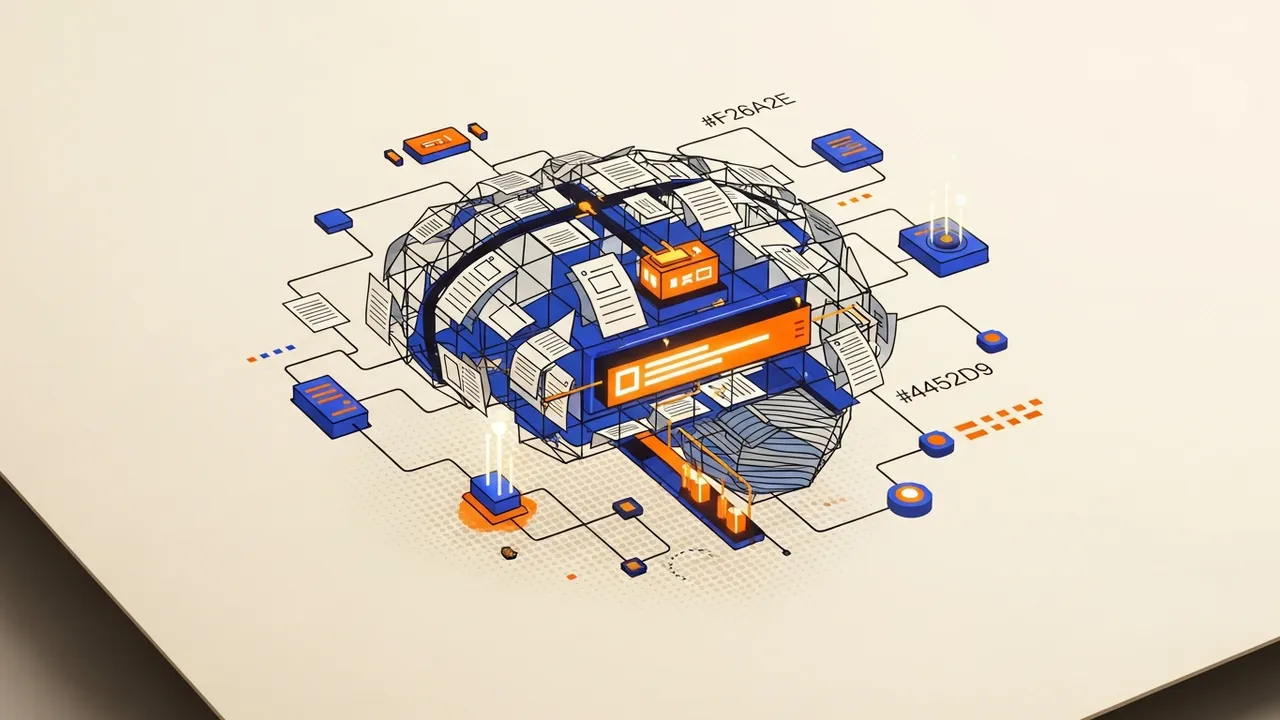
For many organizations, the initial euphoria of deploying generative AI is quickly replaced by a sobering reality: the technology is only as effective as the information it can reach. Enterprises today are drowning in data but starving for actionable knowledge. This is the "Invisible AI Barrier," a state of organizational amnesia where vital intelligence is trapped in the silos of SharePoint, Google Drive, Slack, Teams, Notion, and the fragmented graveyard of PDFs, SOPs, and decks.
Most enterprise AI failures are not the result of flawed algorithms; they are caused by a profound lack of "business memory." To move beyond the novelty of a simple chatbot and build a durable business capability, organizations must stop viewing AI as a bolt-on tool and start treating it as a core architectural layer. Based on the ByteBrain methodology, here are five radical shifts required to make AI work at scale.
1. Your Company Has a Memory Problem (and AI Just Made it Visible)
Data is not knowledge. While your enterprise may have petabytes of data, much of it is unusable for AI because it lacks structure, context, and a single source of truth. When you "set up a chatbot" on top of unorganized files, you aren't creating an assistant; you are automating confusion and inviting hallucinations.
To scale, enterprises must transition to a Living Knowledge OS. This is a dedicated business memory layer designed specifically for AI consumption. It moves knowledge from scattered documents into a clean, governed taxonomy that includes:
- Products and Customers: Current specs and engagement history.
- Policies and SOPs: The "how-to" of your operations.
- Brand Voice and Templates: Ensuring every output remains aligned.
- Decision History: The "why" behind past strategic moves.
By creating this structured architecture, organizations eliminate tribal knowledge dependency. New hires find answers in seconds rather than weeks, and institutional memory survives the inevitable team restructurings that usually wipe out specialized expertise.
Most companies already have the answers. They're just scattered across SharePoint, Slack, and people's heads. Living Knowledge OS turns that scattered knowledge into a structured, governed AI workspace your team can actually use.
2. Governance Isn't a Checkbox — It's the Architecture
The traditional enterprise mindset views governance as a hurdle — a final review by legal or IT that happens at the end of a project, often stalling momentum. In a high-velocity AI environment, this "final review" model creates a bottleneck that prevents scaling.
ByteBrain's 6-step delivery framework (Audit, Architect, Build, Improve, Govern, Enable) shifts governance to the left. By treating governance as part of the Architect phase, ownership, review cadences, and audit trails are built into the system's design from day one.
This leads to the "Speed Paradox": organizations with rigorous architectural governance actually move faster. They don't have to stop and assess risk at every deployment because the risk controls — such as automated contradiction checks and real-time refresh routines — are already running within the workflow.
3. The Death of "Shadow AI" Through Active Registries
The rapid adoption of AI has created a new frontier of "Shadow AI," where experimental agents are deployed across departments without centralized oversight. Rather than attempting to ban innovation, strategic leaders are using the AgentOS Governance model to capture it.
The solution is an Agent Registry — a single source of truth for every approved, experimental, and shadow agent in the company. This registry bridges the gap between the speed of innovation and the requirements of compliance. Every agent is documented via an Agent Card, which provides executive-ready clarity on:
- Purpose: The specific business problem the agent solves.
- Ownership: The accountable business and technical leads.
- Connected Systems & Knowledge Sources: Exactly where the agent pulls data from.
- Permissions & Risk Level: The potential impact on security and operations.
- Business Impact: The measurable outcome the agent is expected to deliver.
4. "Proving" Governance is the New Standard
In the age of regulated AI, simply claiming you have "responsible AI" is insufficient. The new standard for enterprise adoption is the ability to provide evidence. Scaling requires a shift from passive policies to Audit Evidence Models.
This means maintaining a cryptographic-grade record of the AI's lifecycle. Who approved a specific agent? When were its instructions modified? Which human checkpoints were triggered before a proposal was sent to a client? By using AgentOS-style cards and evidence records, IT and compliance teams gain the visibility they need to support rapid scaling without losing accountability.
Because saying 'we have AI governance' is not the same as being able to prove it.
5. Scaling Requires Strategic "Human Checkpoints"
The ultimate goal of AI is often misconstrued as total autonomy. However, true enterprise-grade systems prioritize "human-in-command" architecture. Before AI touches sensitive workflows — such as financial briefing or customer-facing contracts — specific approval gates must be enforced.
During the Improve and Enable phases of deployment, we install self-improvement prompt systems. These are internal agents that review new material, flag contradictions, and route changes to human experts for approval. This ensures the knowledge base stays current without requiring "heroic effort" from the staff. Humans remain the final decision-makers, focusing on strategic direction while the AI handles the manual burden of extraction and organization.
Conclusion: From AI Curiosity to Practical Capability
The transition from AI hype to durable business capability requires a coherent, three-layer portfolio:
- Understand (Strategy): Establishing AI literacy and roadmaps to identify where AI belongs and what outcomes matter.
- Build (Systems): Creating the Living Knowledge OS and workflow automations (Takeaways 1 & 5) that turn data into memory.
- Govern (Control): Implementing the AgentOS Governance layer (Takeaways 2, 3, & 4) to ensure every agent is owned, reviewed, and provable.
As AI agents become a standard part of the workforce, every leader must ask: Is our AI built on the solid ground of a governed memory layer, or is it just a temporary experiment? Turning AI curiosity into a durable capability starts with fixing the memory problem. Is your organization ready to remember?